6 Signs Your Blyth Roof Needs a Professional Clean
Roofs have a way of being forgotten. They sit out of sight above our heads, quietly doing their job, until one day a problem becomes impossible to ignore, and by then it is often larger and more expensive than it needed to be. The secret to looking after a roof is learning to read its early warning signs, so you can act while the job is still a simple clean rather than a repair. For Blyth homeowners, whose roofs face a damp, salty, moss-friendly coast, knowing what to look for is well worth the effort.
Here are six clear signs that your Blyth roof is due a professional clean. Most of them you can spot from the ground or from inside your home, without ever climbing a ladder. If a few of these sound familiar, it is a good time to arrange a proper look.
The quick answer: the main signs a Blyth roof needs cleaning are visible moss on the tiles, dark algae streaks, moss and debris in the gutters, overflowing gutters in the rain, a generally tired and grimy appearance, and any damp appearing inside near the roof. Spotting these early lets a gentle clean sort the problem before it becomes a costly repair.
1. Visible moss growing on the tiles
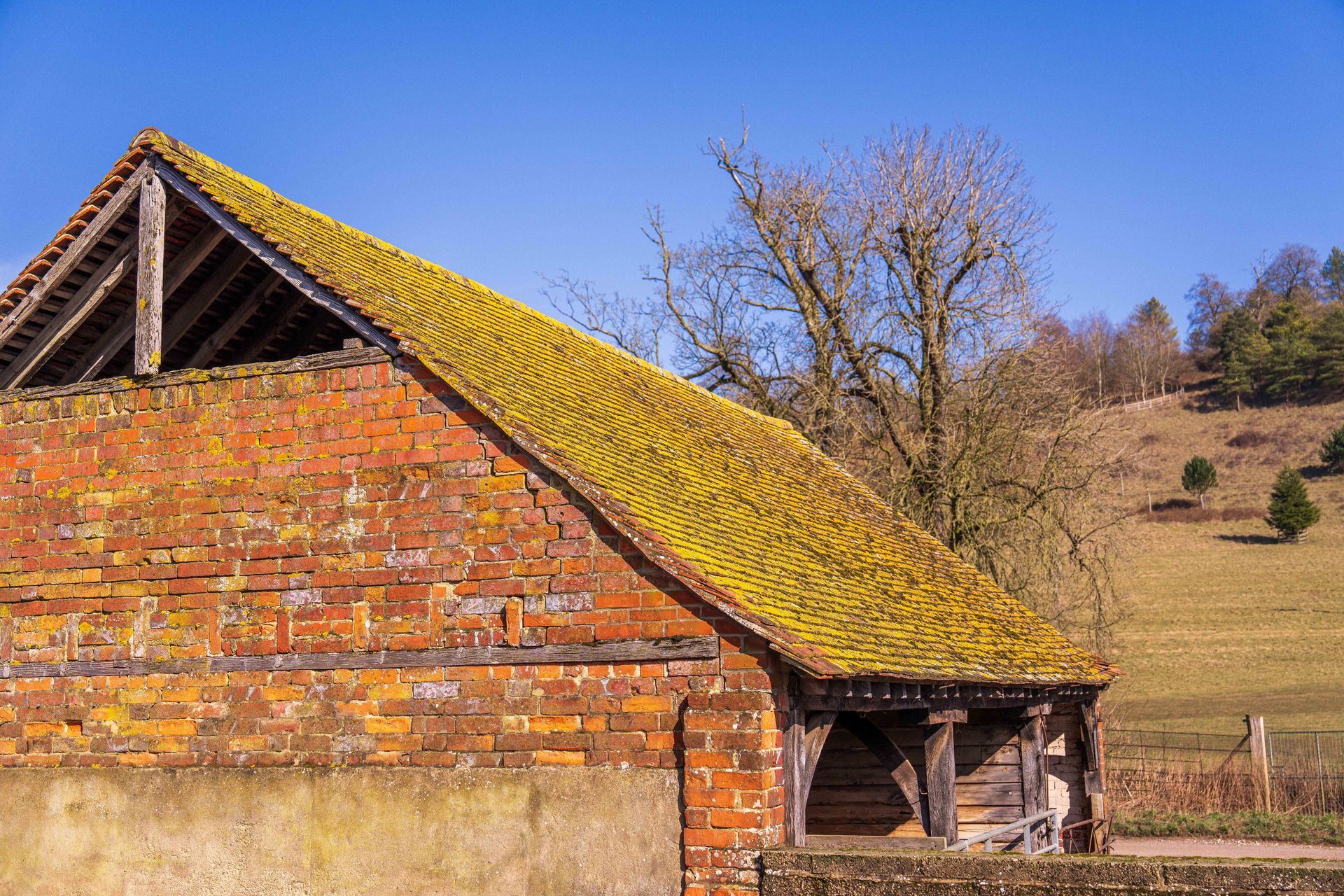
The most obvious sign is moss itself, those spongy green cushions spreading across the tiles. In Blyth's damp, salty coastal air, moss establishes quickly, especially on the shaded slopes, and once it takes hold it thickens year on year. A light green tinge is the early stage; thick, raised clumps mean the growth is well established and holding a great deal of moisture against your roof.
Moss is more than an eyesore. It keeps the tiles permanently damp, and in the cold north-east winters the trapped water freezes and slowly breaks down the tile surface. The moment you can clearly see moss from the ground is the moment it is worth acting, because it will only spread and thicken from there.
2. Dark streaks and algae staining
Long dark streaks running down the roof, often black or greenish, are algae, and they are extremely common on the damp, salty coast. While algae does less structural harm than moss, it looks unsightly, makes the whole house appear tired and neglected, and is often the first growth to appear before moss and lichen follow. The salt-laden sea air feeds this algae, so streaky, stained tiles are especially common on Blyth's coastal roofs.
A professional soft wash removes this staining and treats the surface so it does not simply return, restoring the roof's appearance and slowing the return of all kinds of growth.
3. Moss and debris in the gutters
If you find clumps of moss, grit and debris in your gutters, that material has almost certainly washed down off the roof, and it tells you the roof above is shedding growth. Gutters that fill up quickly after being cleared are a strong sign that the tiles are carrying a significant amount of moss. The two problems feed each other, so gutters full of green material point straight back to a roof that needs cleaning.
4. Gutters overflowing in the rain
Watch your gutters during a heavy downpour. If water spills over the edges instead of running away through the downpipes, they are blocked, and that blockage is usually roof debris. On the coast, wind drives that overflow hard against the walls, making the damage worse, and in winter the standing water can freeze. Overflowing gutters are both a problem in themselves, causing damp walls and foundation trouble, and a symptom of a roof shedding moss. Either way, it is a sign the whole roof and gutter system needs attention.
5. A tired, grimy overall appearance
Sometimes there is no single dramatic problem, just a roof that looks noticeably dirtier, darker and more tired than it used to, or than your neighbours' roofs. Years of accumulated dirt, salt-fed algae and light moss dull the tiles and take the edge off the whole property's appearance. If your roof is letting down the look of an otherwise well-kept home, a professional clean can make a striking difference, restoring the tiles close to their original colour and lifting the whole property.
6. Damp or leaks appearing inside
The most serious sign is damp showing up inside the house, whether stains on an upstairs ceiling, damp patches near the eaves, or a musty smell in the loft. This can mean that blocked gutters, moss-related damage or wind-driven rain finding a gap has finally let water in. Internal damp should never be ignored, as it points to water reaching places it should not. A prompt inspection and clean, along with any necessary repair, is essential to stop the problem worsening.
- Moss on the tiles: the clearest sign, and it only thickens if left.
- Dark algae streaks: a sure sign the surface is staying damp enough to grow, fed by the salt air.
- Green gutters: moss and debris in the gutters come straight off the roof.
- Overflowing gutters: blockages that point back to a moss-shedding roof.
- Damp inside: the most serious sign, needing prompt attention.
Frequently Asked Questions
How do I know if my roof needs cleaning without going up there?
Most signs are visible from the ground: moss on the tiles, dark algae streaks, debris in the gutters, and overflowing gutters in the rain. Damp patches inside near the roof are another key sign. You rarely need to climb up to know it is time.
Is a bit of moss really worth cleaning off?
Yes, because it never stays a bit of moss. In Blyth's damp, salty coastal air moss thickens year on year, holding water against the tiles and causing freeze-thaw damage in the cold winters. Cleaning it while it is light is far cheaper than dealing with the damage later.
Why does my coastal roof have so many dark streaks?
The streaks are usually algae, and the salt-laden sea air feeds it, so coastal roofs like Blyth's are especially prone to staining. The streaks are mostly cosmetic, but they show the roof is staying damp enough to grow. A soft wash removes them and slows further growth.
My gutters keep overflowing. Is that a roof problem?
Often, yes. Overflowing gutters are usually blocked with moss and debris washed down from the roof. Clearing the gutters helps, but if the roof is shedding moss they will block again, so cleaning the roof too tackles the real cause.
What should I do if I see damp inside near the roof?
Have it looked at promptly. Internal damp near the roof can mean water is getting in through blocked gutters, moss-related damage or wind-driven rain finding a gap. A professional inspection and clean, with any needed repair, will stop it worsening.
Recognise a few of these signs on your Blyth roof?
At Ben's Roof Cleaning we will assess your roof, clean it safely with low-pressure soft washing, and treat it to keep growth from returning. With over 15 years of experience, we know exactly what to look for on the coast. Get in touch or call 07889 127153
for a free, no-obligation quote.
Catch the signs early and save yourself the trouble
A roof rarely fails without warning. The green tiles, the dark streaks, the debris-filled gutters and the tired appearance are all the roof telling you it needs attention. Learn to read those signs and you can deal with the problem while it is still a simple clean, keeping your Blyth home protected and looking its best for years to come.